Giles Research Symposium Award

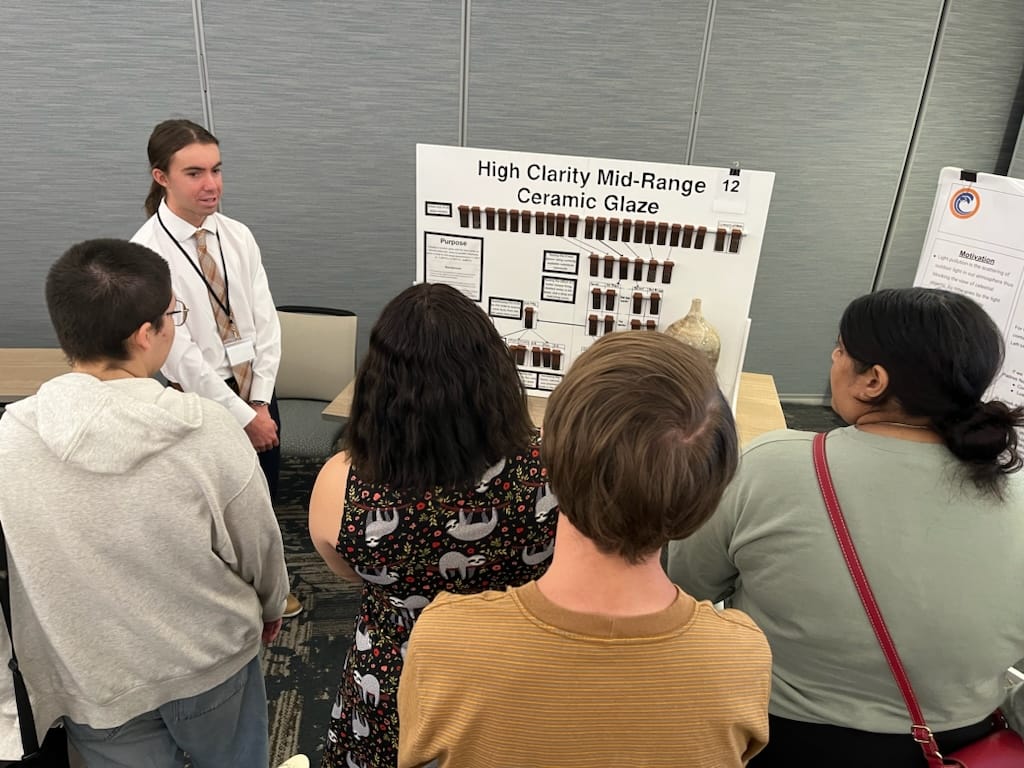
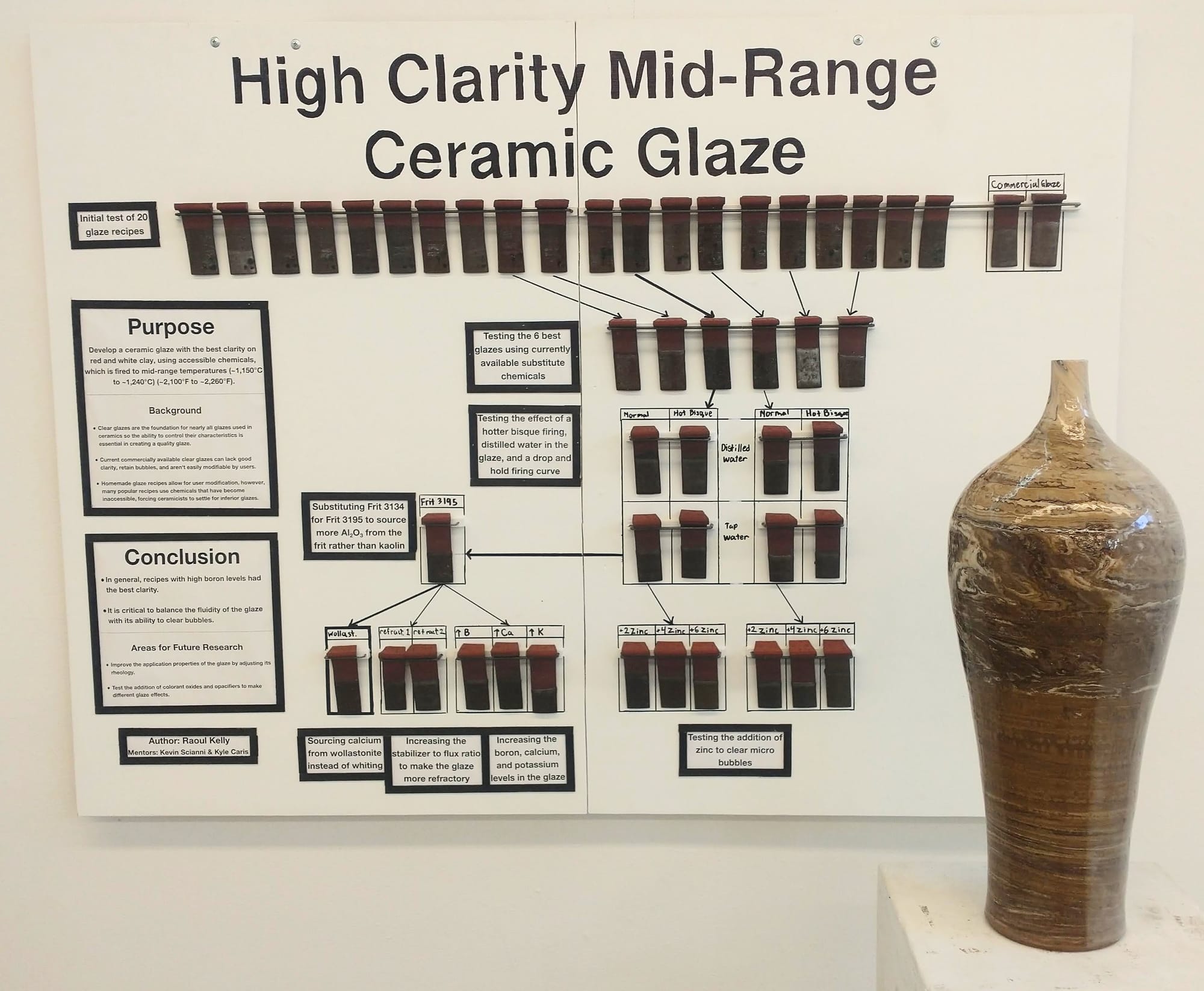
The purpose of this research project is to find a ceramic glaze with the best clarity on red and white clay, using accessible chemicals, which is fired to mid-range temperatures (~1,150°C to ~1,260°C). Clear glazes are the foundation for nearly all glazes used in ceramics so the ability to control their characteristics is essential in creating a quality glaze. Current commercially available clear glazes lack good clarity, retain bubbles, and aren't easily modifiable by users. Homemade glaze recipes allow for user modification, however, many popular recipes use chemicals that have become inaccessible, forcing ceramicists to settle for inferior glazes.
My research began with testing 20 publicly available clear glaze recipes, on high iron red stoneware and white porcelain test tiles, fired to cone 5 (~1,180°C). The tiles were then sorted based on clarity with the six best glazes tested again using accessible substitute chemicals. Finally, additional tests were run on the two clearest glazes from the previous test with modifications to several variables in an attempt to optimize clarity.
After testing, It was found that in general, recipes with high boron levels had the best clarity. It was also critical to balance the fluidity of the glaze with its ability to clear bubbles. While more testing is still needed to optimize the characteristics of this glaze, the recipe produced by this research has already surpassed the quality of commercial clear glazes and provides a good jumping-off point for future research.
This work was initially presented at the Giles T. Brown Research Symposium in April 2024, being awarded second place in the STEM category. It was later put on display in the Yoshida Art Gallery for its connection to the art department at Orange Coast College in December 2024.